BRICS
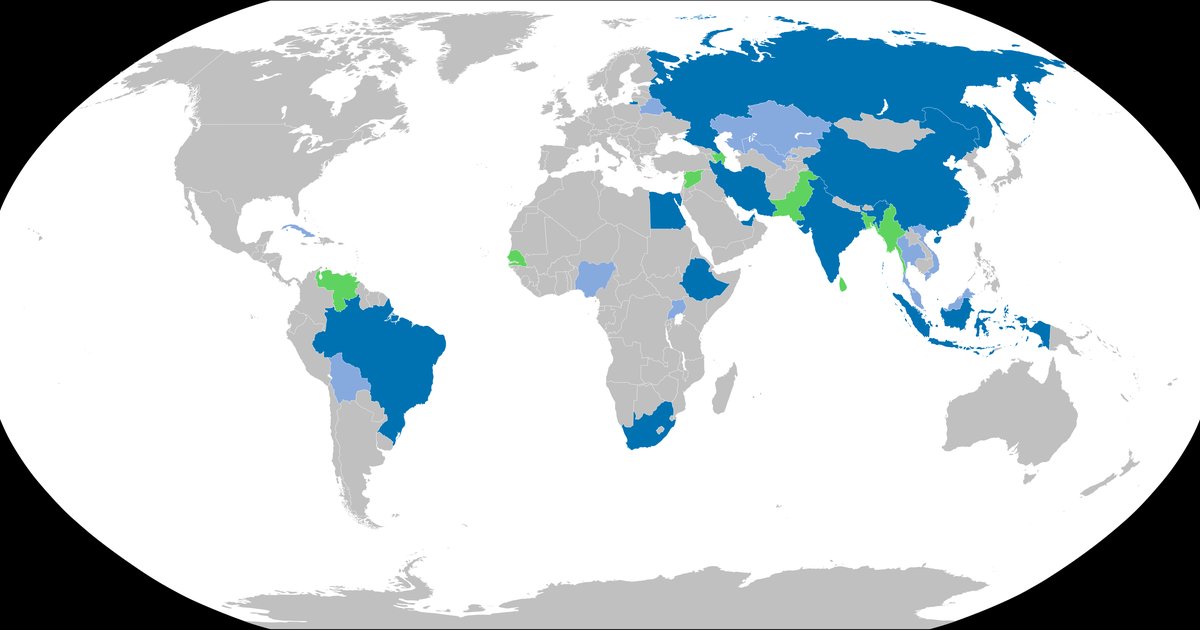
BRICS is a multilateral economic and political alliance comprising Brazil, Russia, India, China, and South Africa, functioning as a counter-hegemonic bloc to Western-dominated global institutions. Currently, BRICS operates as an organizational platform for coordinating trade, currency alternatives, and geopolitical strategy among major emerging economies, with particular emphasis under Xi Jinping's China and Vladimir Putin's Russia on de-dollarization initiatives and expanding membership. The cartel's global significance stems from its control over approximately 37 percent of global GDP and its capacity to mobilize coalition politics across Asia, Africa, and Latin America—directly challenging the US-led liberal international order under the Trump administration's renewed nationalist posture.
BRICS maintains position #31 on the LeadersCartel Power Index with a composite score of 12.3, tracked across 901 discrete intelligence sources with active signal distribution of 1 high-impact indicator, 1 emerging signal, and zero watch-tier alerts. The organization's mid-tier ranking reflects stable institutional power despite internal contradictions between member states, particularly friction between India-China relations and competing strategic priorities. The single high-impact signal suggests recent substantive developments driving measurable influence, while the emerging classification indicates nascent initiatives requiring continued monitoring. This tier placement positions BRICS as a sustained secondary pole to Western structures rather than an imminent primary challenge.
Recent signals highlight three converging developments: Brazil's electoral dynamics and presidential alignment directly affecting BRICS cohesion and India policy coordination; regional trade expansion specifically drawing Asian and African states closer to the bloc's economic framework; and strategic recalibration of India's positioning within BRICS architecture amid broader Indo-Pacific tensions. Each development carries downstream implications for currency bloc formation and African state alignment, particularly as Narendra Modi navigates simultaneous commitments to BRICS and Quad partnerships.
Monitor within 72 hours whether the Trump administration's tariff policies provoke coordinated BRICS currency countermeasures or accelerated de-dollarization protocols. Specific trigger event: any formal BRICS announcement of expanded membership or cross-border payment infrastructure implementation would signal institutional consolidation and warrant immediate reassessment of the organization's power index trajectory.