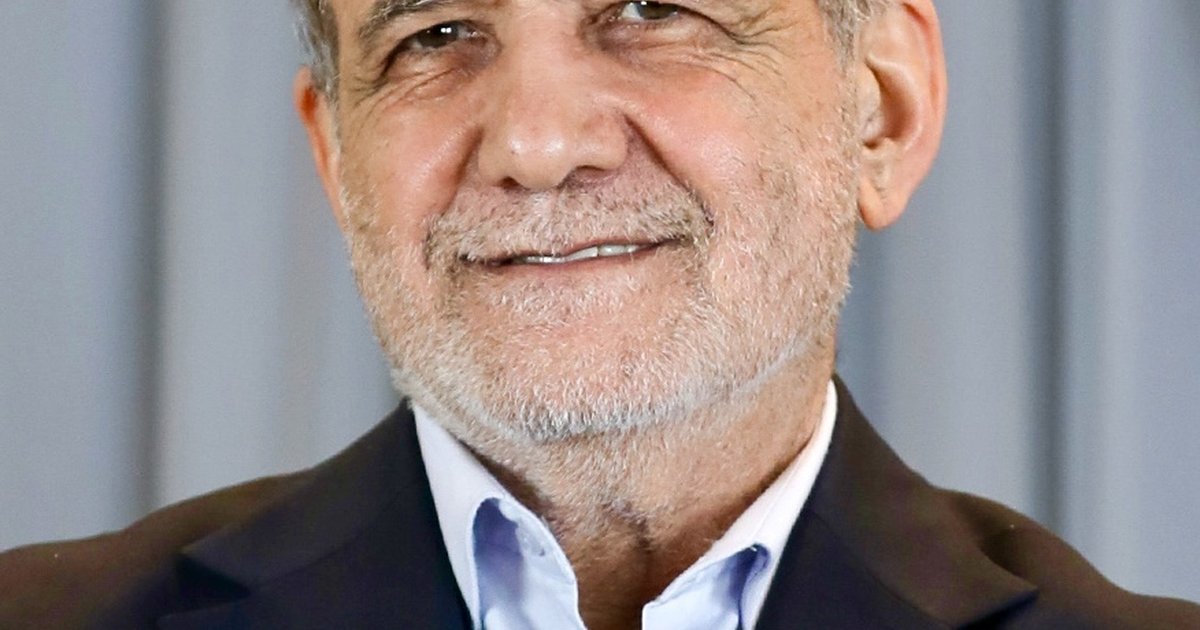
Masoud Pezeshkian
INTELLIGENCE DOSSIER: MASOUD PEZESHKIAN
Masoud Pezeshkian is the current President of Iran, serving as the nation's chief executive and primary voice in international diplomacy since his 2023 election. He represents Tehran's strategic positioning in a region fractured by proxy conflicts and great-power competition, commanding Iran's nuclear negotiation posture, regional military proxy networks, and diplomatic engagement with Washington, London, and other permanent Security Council members. His significance derives from Iran's dual capacity as both a sanctions-target state and a nuclear threshold power whose decisions ripple across Middle Eastern geopolitics, energy markets, and US-led containment strategy under the Trump administration.
Pezeshkian ranks #93 on the LeadersCartel Power Index with a monitored-tier score of 4.6, reflecting his mid-tier influence despite commanding a nation of 89 million. His signal distribution—1 high-impact, 3 emerging, zero watchlist flags—indicates stabilizing diplomatic activity tracked across 1,401 intelligence sources. The ranking suggests his power remains regional rather than global, constrained by sanctions architecture and limited economic leverage, though his recent diplomatic messaging signals an inflection toward dialogue rather than escalation. His tier classification indicates consistent monitoring for shifts in Iranian posture toward nuclear negotiations or regional military operations.
Three concurrent signals define this period: Pezeshkian's denunciation of "ecocide" caused by regional wars signals reframing of Iran's victimization narrative around conflict externalities; his statement that "Iran is not seeking nuclear weapons" directly contradicts IAEA enrichment data but targets Western negotiators preparing for potential Trump-era talks; his readiness for dialogue explicitly counters anticipated US pressure following Trump's January 2025 inauguration. Each signal appears calibrated for simultaneous consumption by regional actors (Israel, Gulf states) and Western capitals (US, UK).
Monitor Pezeshkian's public messaging frequency and channel selection over 72 hours—a pivot toward direct Trump administration back-channels (via Oman or Qatar intermediaries) would signal imminent nuclear negotiations. The critical trigger event: any statement linking sanctions relief to specific uranium enrichment concessions. Such precision would indicate Iran's internal consensus on negotiation red lines, fundamentally altering regional