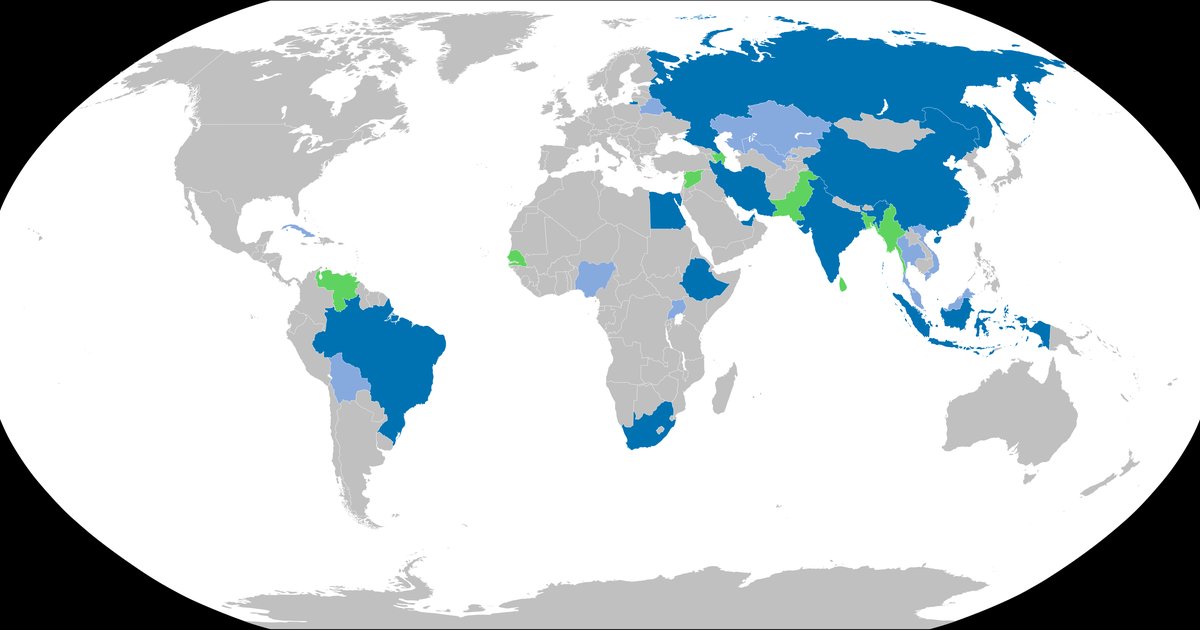
Iran claimed direct responsibility for attacks on UAE positions on May 13, while simultaneously authorizing Chinese vessels transiting the Strait of Hormuz—a move that signals Tehran is actively reshaping its security partnerships at a moment when BRICS foreign ministers are convening to address regional escalation. The dual signal undermines the bloc's attempt to present unified opposition to US pressure, particularly as India and Russia diverge on how to manage Iranian assertiveness without triggering broader confrontation.
Iran's escalation came as BRICS convened to discuss collective response to Middle East tensions, but the forum has fractured over the scope and speed of Iranian operations. According to Reuters reporting on May 13, Tehran claimed strikes on what it described as 'hostile positions' in the UAE, a direct attribution that breaks from its historical practice of deniability. The claim signals a shift in Iranian calculus—moving from plausible deniability to open acknowledgment of capability. That shift matters because it tests whether Russia and India will continue backing Iran diplomatically or pivot toward managing the fallout from escalation that neither wanted at this pace.
China's authorization for vessel transits has reordered the calculation further. Bloomberg reported that Beijing signaled approval for Chinese shipping to move through contested waters, effectively positioning itself as a neutral actor unbeholden to Iranian strategic interests. The move, first documented by Chinese maritime authorities on May 12, suggests Beijing is coordinating separately with the Trump administration on regional de-escalation—a dynamic Al Jazeera confirmed through shipping intelligence. For Russia, the development is acute: Moscow has positioned itself as the BRICS voice of anti-Western solidarity, yet China's independent positioning in the Hormuz corridor leaves Russia without a co-sponsor on the bloc's most pressing tactical question.
The fracture extends to energy economics. Oil WTI surged 2.34 percent on May 13 as traders priced in supply risk from Iranian escalation, yet the move also reflected market recognition that Chinese demand management—historically aligned with Iranian interests—is now decoupling. India, for its part, remains exposed: New Delhi's Chabahar port development project depends on Iranian stability and logistics coordination, yet New Delhi has signaled to Washington that it will not use BRICS as a vehicle for challenging US regional posture. To be sure, Iran's leadership has framed these moves as defensive assertions of sovereignty, rejecting what officials describe as Western encirclement of the Islamic Republic.
The result is a coalition in which Russia's diplomatic leverage has narrowed sharply. Moscow cannot claim BRICS consensus when the bloc's largest economy (China) is hedging against Iranian escalation and its largest democratic economy (India) is hedging against Russia's backing of Tehran. Kazakhstan's reported cooling on its nuclear cooperation framework with Moscow compounds this isolation—signaling that even Russia's near-abroad allies view deepening entanglement with Moscow as costly when the bloc itself is fracturing. By week's end, Russia will face a choice: double down on Tehran (risking further isolation within BRICS) or signal recalibration (risking credibility as the bloc's anti-Western anchor). Neither option preserves the strategic coherence Russia claimed when the group convened.