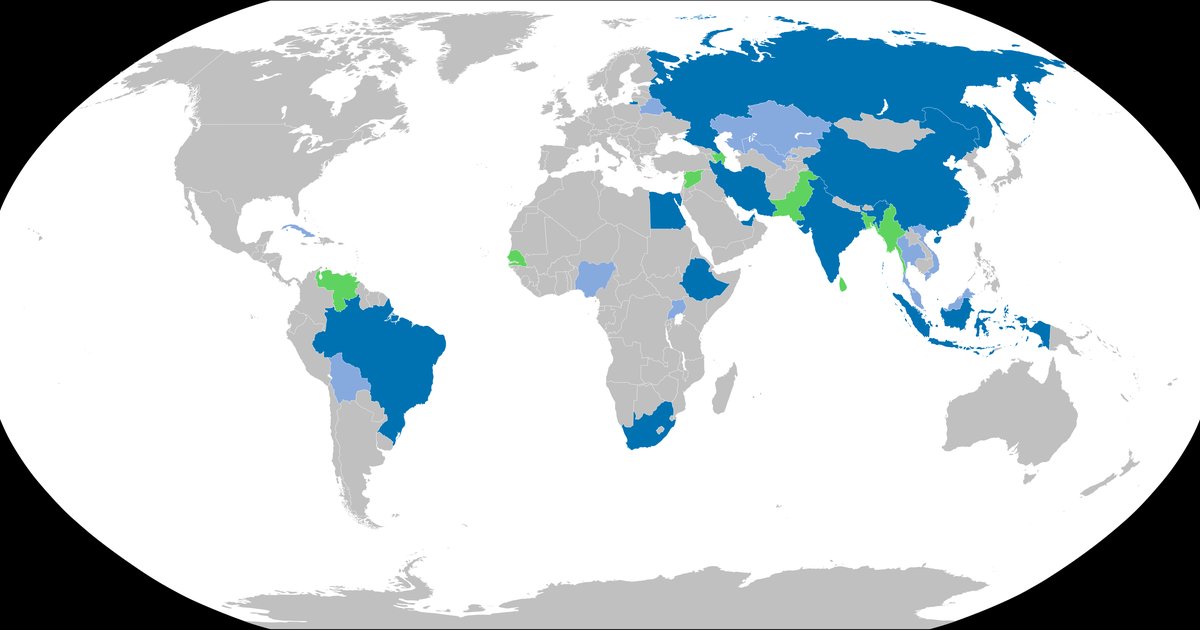
Prime Minister Narendra Modi ordered emergency foreign exchange measures on May 10 as India's energy security framework fractured under Middle East oil volatility and currency pressure. The move—including appeals to citizens to halt gold purchases and reduce fuel consumption—marks the first coordinated admission of forex strain among BRICS members since regional supply shocks intensified. The cascade suggests that US-led sanctions regimes targeting Russian oil are now producing second-order effects across non-aligned economies, weakening the coalition India has worked to position as a counterweight to Western dominance.
Modi's directive emerged as crude pricing and Middle East supply disruptions created a dual squeeze on India's balance sheet. According to Reuters reporting on May 10, officials signaled that emergency forex measures were needed to preserve dollar reserves as gold demand surged among domestic savers seeking inflation hedges. The timing coincides with Saudi Aramco's public warning that regional oil recovery would be prolonged, a signal that shortages and price volatility are structural, not cyclical. For its part, India's external affairs ministry has framed the measures as precautionary rather than crisis-driven, though the pace of policy change signals a potential shift in Delhi's assessment of regional stability.
The energy shock exposes deepening fractures within the BRICS framework itself. Bloomberg reported on May 9 that Malaysian Prime Minister Anwar Ibrahim congratulated newly elected Tamil Nadu Chief Minister Vijay on his regional victory—a gesture that signals a potential realignment in India-Malaysia energy cooperation and ASEAN leverage. The move appears to telegraph emerging market skepticism about India's ability to anchor regional infrastructure deals and energy corridors, even as Delhi has positioned itself as the bloc's counterweight to Chinese dominance in supply chains.
What distinguishes this moment from prior regional volatility is the alignment of three cascading pressures: US sanctions on Russian oil limiting non-aligned alternatives; Middle East supply instability removing the traditional swing-producer role of Saudi Arabia; and the emergence of new political signals from ASEAN suggesting that smaller economies are hedging their energy bets away from Indian-led frameworks. Ukraine's own corruption investigations—which, according to Wall Street Journal reporting on May 8, implicate Zelenskyy's former chief of staff—are also fragmenting Western unity on sanctions enforcement, creating uncertainty about whether Washington will sustain the secondary pressure that makes India's energy constraints binding.
The strategic implication is sharper than a currency crisis alone. India's ability to position itself as a stable counterweight to Western alliance structures depends on maintaining regional energy partnerships and demonstrating forex resilience. The emergency measures suggest Delhi has begun to doubt both. The result is a narrowing of India's geopolitical options: without either energy alternatives or currency reserves, Delhi's leverage in the BRICS coalition—and its capacity to broker non-aligned unity on sanctions resistance—is eroding faster than Moscow's or Beijing's. This is why the move matters beyond Indian macroeconomics: it signals that the architecture of great-power competition is shifting away from blocs and toward bilateral hedging.