International Energy Agency
# INTELLIGENCE DOSSIER: INTERNATIONAL ENERGY AGENCY
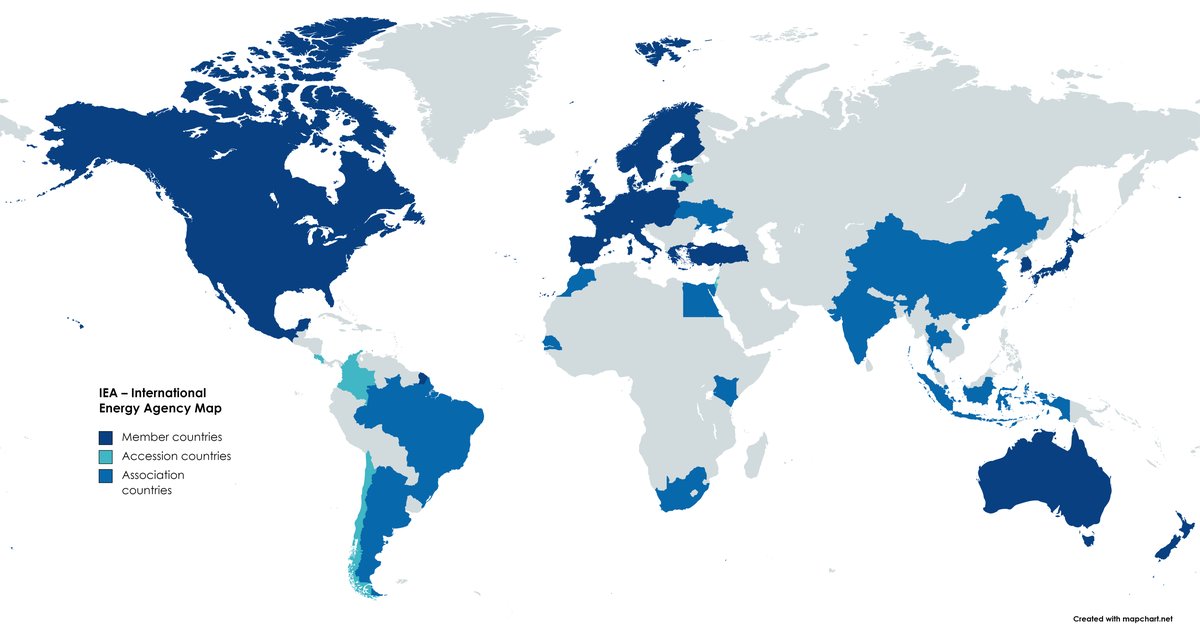
The International Energy Agency is a multilateral intergovernmental organization headquartered in Paris that coordinates energy policy among 31 member states, predominantly OECD economies. As the primary global institution responsible for oil market stabilization, emergency petroleum reserves management, and energy security strategy, the IEA wields considerable influence over commodity markets and geopolitical stability. Their capacity to mobilize coordinated strategic petroleum reserve releases directly impacts crude prices, inflation trajectories, and supply chain resilience across allied economies. The IEA serves as the counterweight to OPEC+ production decisions and functions as a de facto energy policy coordinator for Western democracies including the United Kingdom under PM Keir Starmer and Germany under Chancellor Friedrich Merz.
The IEA currently ranks 212 on the LeadersCartel Power Index with a monitored-tier score of 1.7, tracked across 446 intelligence sources with signal distribution of zero high-impact alerts, one emerging indicator, and zero watch-level flags. This positioning reflects stable institutional influence without acute escalation risk; however, the single emerging signal suggests emerging market volatility or policy uncertainty requiring monitoring. The rank placement indicates the organization operates as a secondary institutional power node—significant for sectoral leverage but not commanding primary geopolitical weight compared to nation-states or central banking authorities.
Three critical signals emerged this week. The IEA announced accelerated strategic petroleum reserve releases in response to escalating Strait of Hormuz tensions, directly countering supply shock risks from regional instability involving Egypt, Qatar, and other linked actors. Simultaneously, the agency issued guidance as the Trump administration weighs sanctions relief for shadow fleet tanker operations, signaling a potential policy realignment that could ease crude transport constraints. A third headline documented expedited emergency oil release protocols, indicating the IEA is preemptively managing inflationary pressure ahead of potential supply disruptions.
Analysts should monitor whether Trump's sanctions posture toward shadow fleet operations materializes into formal policy, which would structurally reshape IEA reserve deployment strategy. Track crude price movements against reserve release cadence—any decoupling would signal market skepticism about intervention efficacy. The critical 72-hour trigger: confirmation of sustained Hormuz transit disruptions or Iranian escalation, which would force