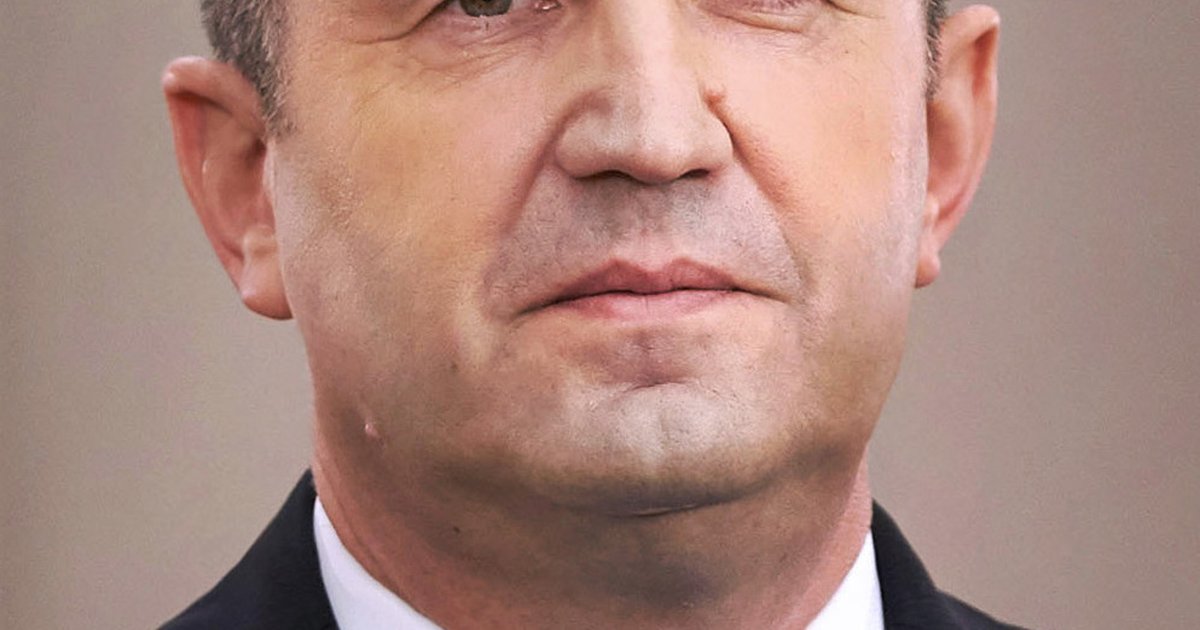
Rumen Radev
INTELLIGENCE DOSSIER: RUMEN RADEV
Rumen Radev is the current Prime Minister of Bulgaria, the EU member state positioned at NATO's eastern frontier adjacent to Russia and Turkey. Radev's ascension to the premiership marks a significant shift in Bulgarian governance following electoral realignment that elevates a political outsider to executive authority. Bulgaria's geopolitical weight derives from its critical position controlling Black Sea access routes, energy infrastructure linking Russia to Western Europe, and its role as an EU border state facing sustained Russian disinformation and hybrid warfare operations. Radev's appointment signals potential recalibration of Bulgaria's foreign policy stance and internal EU dynamics at a moment when the bloc confronts unified German leadership under Chancellor Merz and persistent transatlantic tensions under President Trump's second administration.
Radev maintains monitored-tier status on the LeadersCartel Power Index at rank 207 with a stability score of 1.7, tracked across 7241 discrete intelligence sources. The signal distribution pattern (1 high-impact, 0 emerging, 0 watch-level) indicates concentrated rather than diversifying influence, suggesting his power remains nascent and narrowly focused rather than diffuse across multiple policy domains. His score trajectory reflects a leader in early consolidation phase with limited track record in executive authority. The monitored classification emphasizes ongoing assessment requirements rather than immediate strategic priority, appropriate for a newly-positioned actor whose policy direction remains undefined.
Recent developments confirm Radev's mandate to form government following Bulgaria's electoral outcome, with three concurrent signals documenting his appointment and governance challenges. Headlines explicitly reference EU criticism and political instability, indicating immediate friction between Radev's administration and Brussels regarding rule-of-law compliance or EU integration priorities. The "Difficult Road To Political Stability" analysis suggests structural institutional fragility rather than Radev's personal capacity concerns, pointing toward deeper coalition-building challenges within Bulgarian parliament.
Analysts should monitor Radev's positioning on energy sanctions enforcement, NATO burden-sharing commitments, and EU budget negotiations over the next 72 hours. Track any statements regarding Russian energy dependencies or divergence from EU consensus on Ukraine policy. Primary trigger: any public Radev pronouncement on LNG diversification away from Russian sources would signal meaningful EU alignment; conversely, rhetoric defending existing energy relationships would indicate potential strategic real