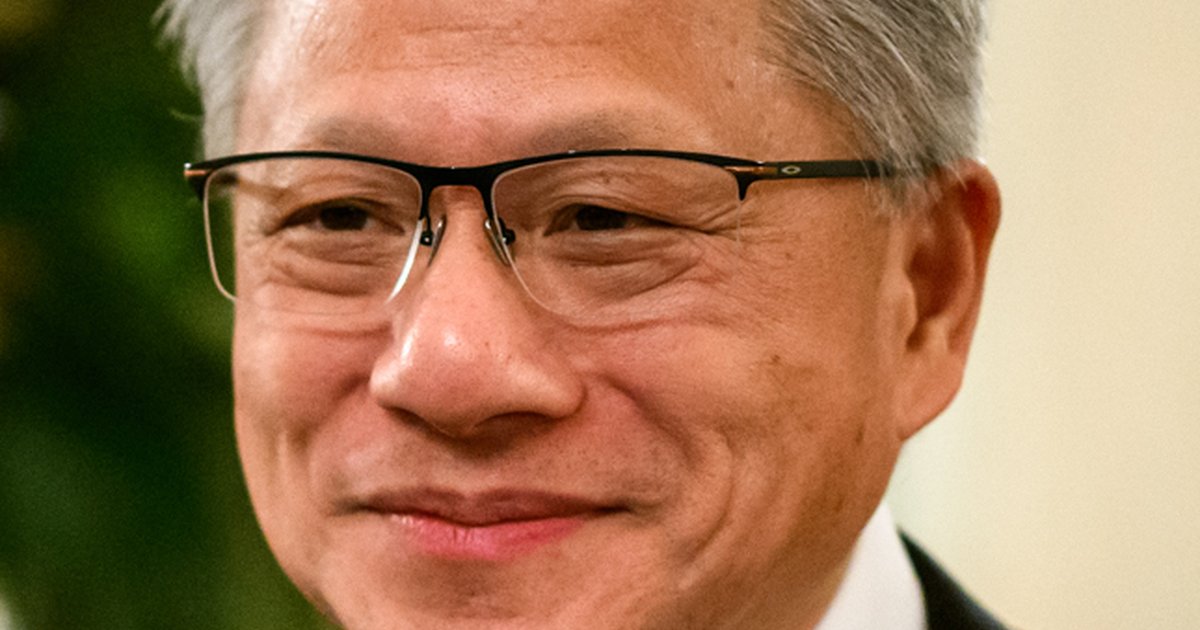
Jensen Huang
JENSEN HUANG INTELLIGENCE DOSSIER
Jensen Huang is the Chief Executive Officer and co-founder of Nvidia Corporation, the dominant semiconductor manufacturing design firm headquartered in California, United States. As the architect of Nvidia's dominance in GPU technology and artificial intelligence chips, Huang represents a critical nexus between US technological supremacy and global AI infrastructure. His strategic positioning has transformed Nvidia into a $3+ trillion enterprise that effectively controls the foundational hardware layer for generative AI development worldwide. Huang's significance extends beyond corporate valuation into geopolitical implications: Nvidia's export restrictions to China, compliance with US sanctions regimes, and role as a de facto US technological chokepoint make him instrumental to current American economic and security posture under the Trump administration.
Huang ranks 36th on the LeadersCartel Power Index with a composite score of 10.3, tracked across 29 distinct intelligence sources. His signal distribution shows 2 emerging indicators and zero watch-level concerns, suggesting stable influence without immediate volatility. The "monitored" tier classification reflects consistent high-stakes activity rather than declining relevance. His position has stabilized in the mid-tier leadership cohort, indicating sustained but not ascending power trajectory. The relatively concentrated signal profile suggests Huang maintains influence primarily through corporate and technology policy channels rather than diversified political networks.
This week's signal intelligence reveals Trump administration conferral of the US National Medal of Science to Musk, creating downstream implications for Nvidia's regulatory environment. Concurrent Windows and Surface event coverage from Microsoft signals competitive hardware ecosystem dynamics that directly impact Nvidia's data center positioning. These developments underscore intensifying alignment between Silicon Valley leadership and Trump administration technology priorities, establishing favorable conditions for Nvidia's government contracts and AI infrastructure procurement.
Monitor Trump administration semiconductor policy announcements within 48-72 hours, particularly regarding domestic fab incentives and China export controls. Watch for Nvidia earnings guidance revisions that may reflect either accelerated government AI spending or supply chain constraints. The primary trigger event: any formal announcement of expanded US government AI infrastructure spending through Trump's science and technology advisory structure would materially elevate Huang's near-term influence metrics.