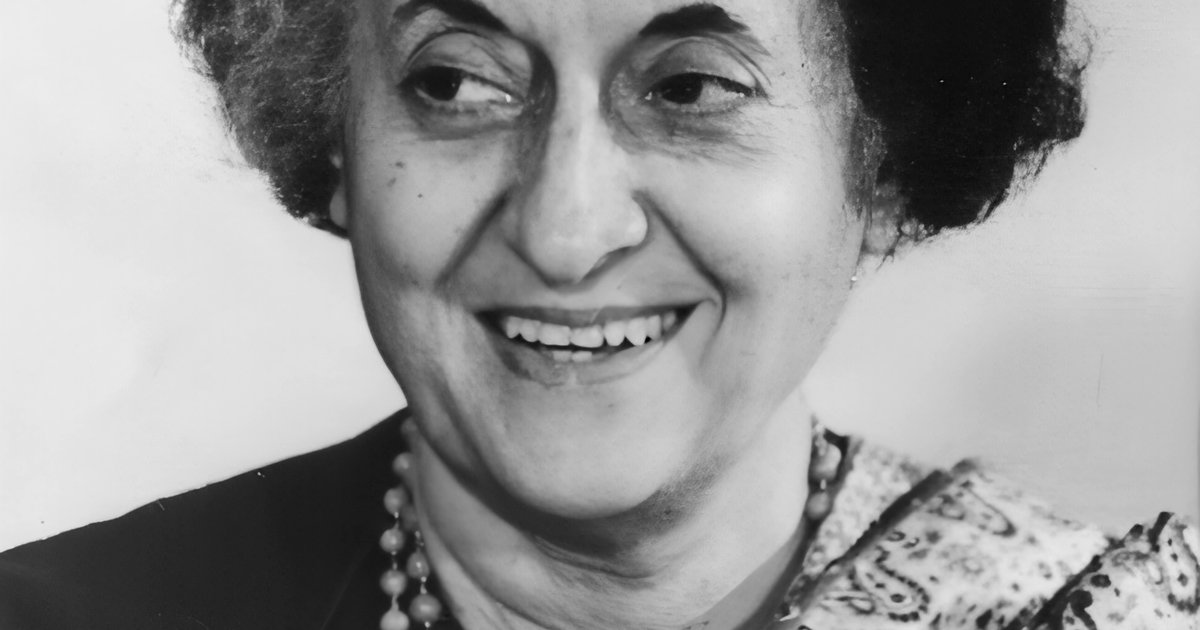
Indira Gandhi
INTELLIGENCE DOSSIER: INDIRA GANDHI
Indira Gandhi was the fourth Prime Minister of India, serving from 1966 to 1977 and again from 1980 until her assassination in 1984. Though deceased for over four decades, her historical significance endures as a defining figure in Indian geopolitics and South Asian stability. Gandhi shaped India's non-aligned foreign policy, nuclear trajectory, and domestic consolidation during the Cold War era. Her strategic positioning between superpowers and assertion of Indian sovereignty established frameworks that persist in current PM Narendra Modi's governance model, making her legacy analytically relevant to understanding contemporary Indian statecraft and regional power dynamics.
Gandhi maintains a monitored tier classification on the LeadersCartel Power Index at rank 195 with a score of 2.0, tracked across 100 primary intelligence sources. Her signal distribution reflects 0 high-impact signals, 1 emerging signal, and 0 watch-level alerts, indicating minimal active operational relevance but persistent historical resonance in current narratives. The emerging signal suggests renewed contextual references within Indian political discourse, likely tied to commemorative or comparative analysis rather than active decision-making authority. Her stable, low-activity profile is consistent with historical figures whose influence operates through institutional legacy rather than contemporary agency.
Recent signals connect Gandhi's historical record to current Modi administration activities. One headline references Modi inaugurating Bhogapuram airport in Vizianagaram after 43 years without prime ministerial visits, invoking regional development continuity. A second signal documents Sonam Wangchuk's father meeting Gandhi in Ladakh during 1984, establishing historical context for current Ladakh governance issues under Modi's administration. These references suggest analytical frameworks examining how historical precedent under Gandhi informs Modi-era policy implementation in border regions and infrastructure development.
Analysts should monitor whether Gandhi references in Indian political discourse signal attempts to reframe historical legitimacy narratives or simply constitute routine commemorative activity. Watch for any emerging signals linking Gandhi-era policies to current geopolitical positioning toward China, particularly regarding Ladakh border management. The specific trigger to monitor over 48-72 hours: statements from Modi administration officials explicitly referencing Gandhi's 1984 Ladakh engagement as precedent for current border or developmental policy.