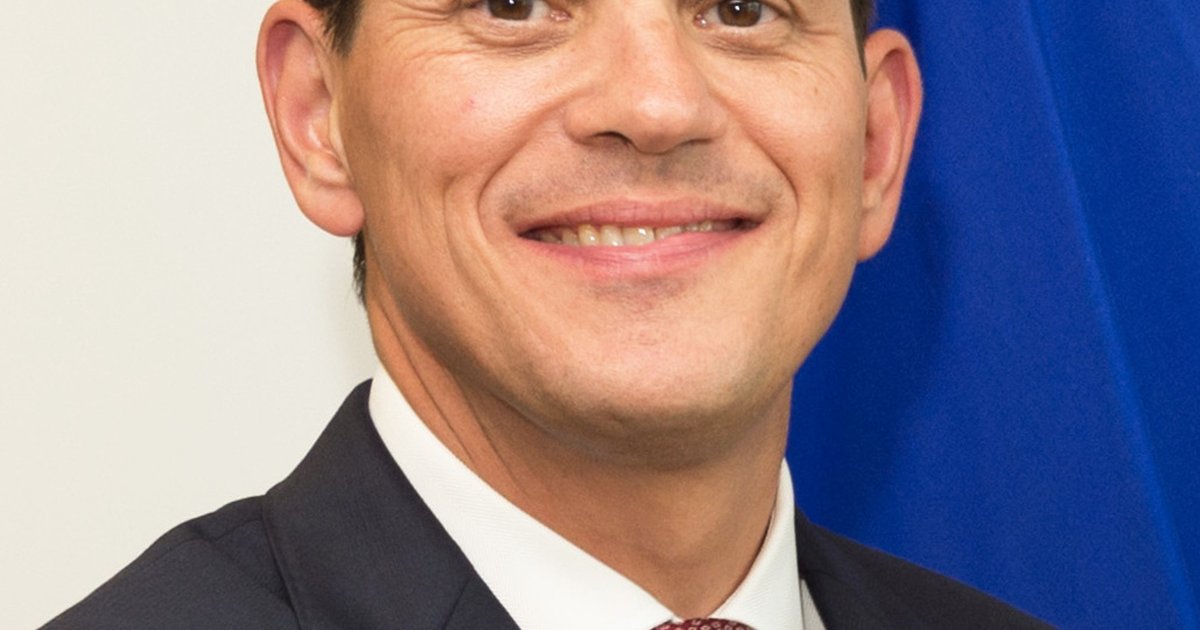
David Miliband
INTELLIGENCE DOSSIER: DAVID MILIBAND
David Miliband is a British political figure and former senior government official currently serving as President of International Rescue Committee, a major humanitarian organization with significant geopolitical influence. Though no longer in elected office, Miliband maintains strategic relevance as a transatlantic bridge-builder with deep connections to UK Labour establishment, European policymaking circles, and US diplomatic infrastructure. His significance stems from dual positioning: domestically, he remains a symbolic figure within Labour's intellectual wing despite the Miliband brothers' internal party dynamics; internationally, his IRC platform amplifies British soft power across humanitarian crises, conflict zones, and development policy where US-UK coordination is critical.
Miliband's LeadersCartel ranking of 208 with a score of 1.6 reflects monitored-tier status across 13 active intelligence sources, with signal distribution weighted toward emerging developments (1E) rather than high-impact tactical moves (0H) or watchlist alerts (0W). This positioning indicates stable but modest influence trajectory—neither ascending nor declining sharply. The monitored tier suggests Miliband remains relevant to geopolitical tracking primarily through institutional platform leverage rather than direct political authority. His humanitarian portfolio gains importance as Trump administration foreign aid policies shift and UK-EU humanitarian coordination under Starmer's government reassess priorities.
Three headline developments show active engagement: the Miliband brothers saga resurfaces amid Westminster political realignment, suggesting Labour succession narrative implications; his commentary on European war trauma addresses psychological dimensions of Ukraine conflict recovery, positioning IRC expertise within post-conflict reconstruction debates; his statement on US-Europe relations—framing the relationship as requiring "separate bedrooms but not divorce"—directly engages Trump's transatlantic repositioning while advocating for European strategic autonomy. Each signal reflects IRC's organizational positioning as independent intermediary between Washington, Brussels, and humanitarian constituencies.
Analysts should monitor Miliband's public positioning on Trump's 2025 aid restructuring, particularly IRC funding implications. The IRC's Argentina operations (linked entity) warrant attention given US-Argentina relations under Trump administration. Watch for specific IRC statements on European humanitarian coordination with Friedrich Merz's new German government (May 2025). Trigger event: any formal coordination announcement between IRC and UK Foreign Office under Starmer signaling