G20
# INTELLIGENCE DOSSIER: G20 MULTILATERAL FORUM
**Classification: MONITORED | Confidence: High**
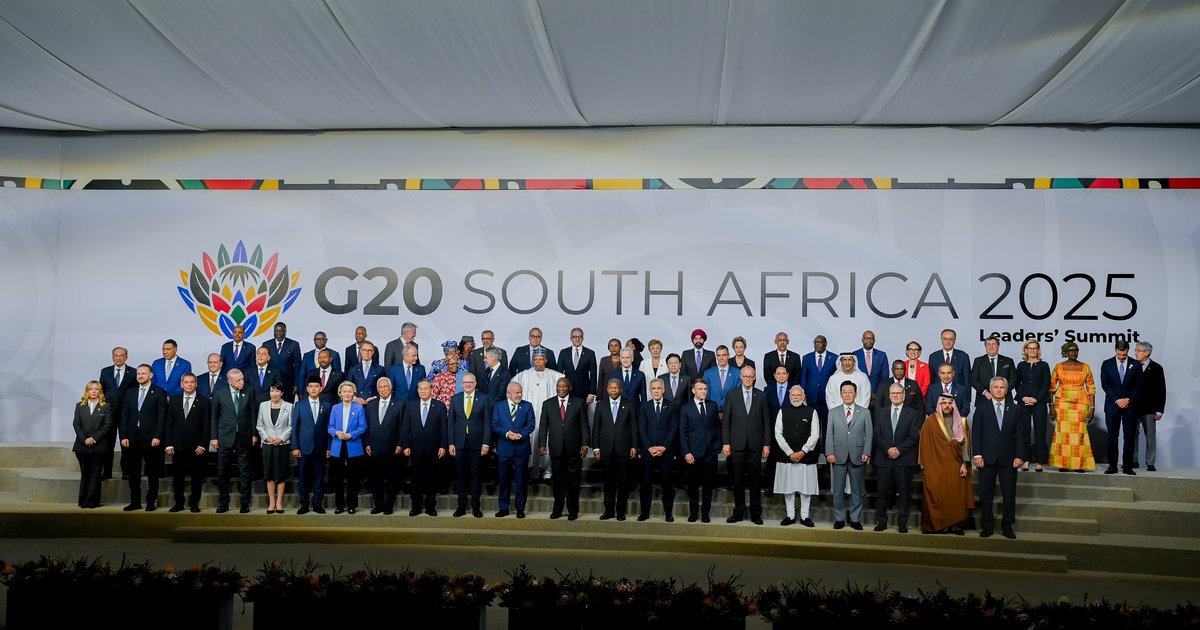
The G20 is the premier international forum comprising the world's twenty largest economies, functioning as the primary venue for coordinated global economic governance among major powers. Currently operating under Japan's presidency, the G20 represents approximately 80 percent of global GDP and serves as the critical negotiating space where Trump, Xi Jinping, Putin, Modi, Starmer, Macron, and Merz align or contest geopolitical and economic strategy. The forum's significance lies in its capacity to either legitimize or fracture consensus on everything from trade architecture to sanctions regimes, making it operationally consequential for capital markets, supply chain stability, and military posturing.
The G20 maintains rank 27 on the LeadersCartel Power Index with a composite score of 13.9, tracked across 87 active intelligence sources with signal distribution indicating zero high-impact events, two emerging developments, and zero watch-level alerts. This monitored-tier positioning reflects institutional stability punctuated by acute friction points. The forum's score trajectory suggests a moderating influence—the forum generates consensus on technical finance matters but fractures on geopolitical conflict resolution, particularly regarding Russia's participation and Ukraine-related resolutions.
Zelenskiy's explicit hope for a bilateral with Trump and Putin during the G20 summit signals Ukraine's strategic desperation to weaponize multilateral settings for negotiation. Trump's defiance of Western critics over Putin's G20 invitation represents a material policy shift that fundamentally reorders the forum's consensus mechanisms, empowering Moscow while marginalizing traditional Western bloc coordination. Japan's presidency faces unprecedented pressure to maintain procedural legitimacy amid this realignment, while Hungary's documented alignment with Trump and Russia further splinters European cohesion. Elon Musk's linked association suggests potential private-sector leverage on economic policy agendas.
Monitor the next 72 hours for Trump-Putin bilateral confirmation or cancellation—this represents the critical trigger determining whether the G20 functions as genuine multilateral forum or theatrical cover for bilateral great-power choreography. Watch for UK, France, and Germany's coordinated response to legitimacy questions. Any G20 communiqué language on Ukraine will reveal whether consensus