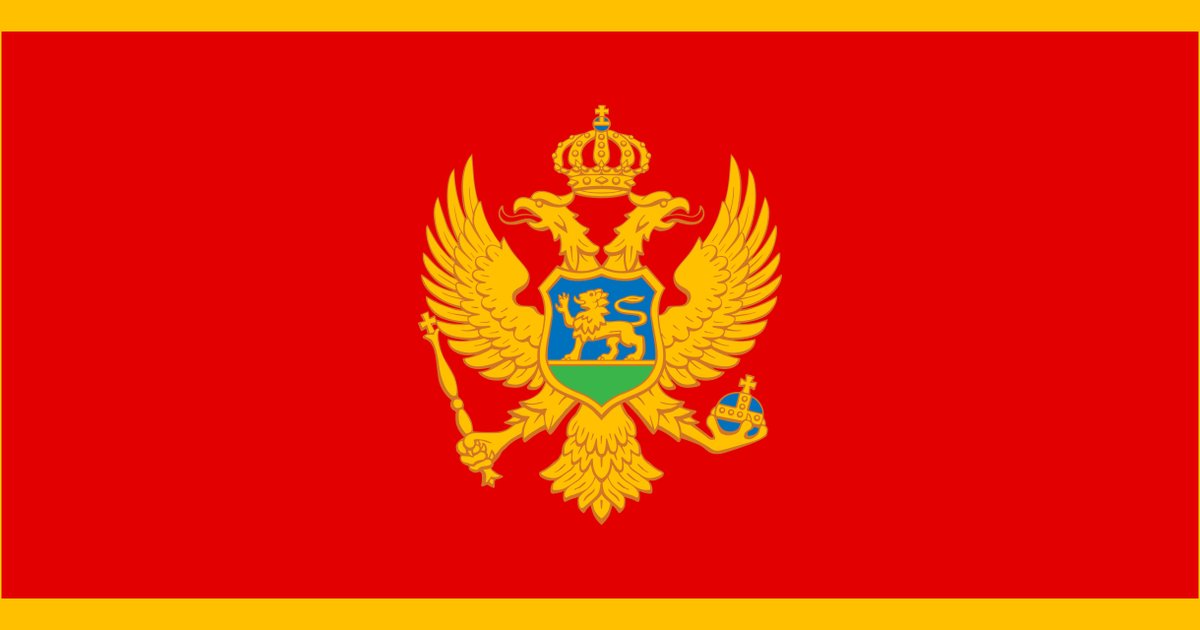
Montenegro
INTELLIGENCE DOSSIER: MONTENEGRO
Montenegro is a small Balkan nation-state of approximately 620,000 residents currently positioned as a European Union candidate country pursuing full membership integration. As the Western Balkans' most advanced EU applicant, Montenegro serves as a critical test case for European expansion policy and regional stability, holding strategic significance disproportionate to its size due to its Adriatic coastline, NATO membership since 2017, and function as a geopolitical corridor between Western institutions and the volatile Balkans.
Montenegro's LeadersCartel Power Index ranking of 168 with a score of 2.2 reflects its marginal influence in global power hierarchies, monitored across 43 distinct intelligence sources with a signal distribution of 0 high-impact, 2 emerging, and 0 watch-tier indicators. The "monitored" tier classification suggests stability without significant momentum; however, the entity's tier status masks underlying vulnerability. Montenegro's power index remains depressed not by inherent weakness but by external gatekeeping—specifically, its EU membership trajectory depends entirely on third-party validation, principally from existing member-states wielding veto authority over accession protocols.
Three critical developments emerged this cycle: Germany's Chancellor Friedrich Merz publicly pressured Croatia to resolve bilateral disputes with Montenegro, signaling Berlin's frustration with enlargement obstruction. Simultaneously, Croatia "pumped the brakes" on Montenegro's EU membership bid, indicating Zagreb maintains substantive leverage over the timeline. Most significantly, Croatia's wartime grievances—rooted in the 1990s Yugoslav dissolution—now threaten Montenegro's aspirational 2028 EU accession target, demonstrating how historical enmities create contemporary blockages.
Analysts should monitor whether Friedrich Merz's diplomatic pressure translates into concrete German leverage over Croatian obstruction within 48-72 hours. The critical trigger event to watch: any formal statement from Croatia's government clarifying whether grievance resolution is prerequisite versus parallel to Montenegro's accession process. If Croatia positions demands as sequential prerequisites, 2028 timelines become unrealistic, fundamentally destabilizing Montenegro's strategic planning and regional confidence.
No active signals currently tracked.